
Credibility on the web is not easily earned. To be a successful designer, you need people to recognize you as skilled, competent and professional. When someone needs something designed they turn to you because you’ve proven yourself to them as capable and reliable. That’s web cred! Once you’ve established yourself, life as a designer starts to get easier. Clients will start rolling in and your days of spec work and begging for projects will be over. Getting to that point, however, is no easy task. Being recognized by your peers and potential/current clients as an authority on design takes a lot of hard work, time and often luck. Here are some tips to put your name out there and earn some legitimate Web Cred.
Do Work
If you want to be a capable designer you’ve got to prove yourself capable. There’s no better way then to get out there and Do Work Son! If all you do is read blogs about design and never design anything, what good does that do you? Your head may be full of knowledge but if you have nothing to show for it, have you really gained anything? So quit spending all your time reading (except for this blog) and go out and design something.
Source:lensbug.chandru
If you’re just starting out, you can’t be picky when it comes to the projects you take on. If you run across an opportunity to add some designs to your portfolio, take the chance. That’s not to say that you need to do work for free. Establish yourself as a professional early by charging for your work. You don’t want your clients thinking you’re a pushover who can be manipulated into minimum wage labor. At the same time, you can’t expect the big bucks right away either. But as you grow and as your designs improve, your credibility will be taken to another level.
Setup Shop
A web presence for designers is an absolute must. You don’t need all the bells and whistles, just a simple web presence to let people know that you’re legit. A friendly, clean design with a sample of your work, your skills/services, and information on how to contact you is all you need to get rolling. Take the time to set it up right so that when someone does land on your site, they feel like they can trust you with their business. This will be the foundation on which the rest of your web cred will be built.
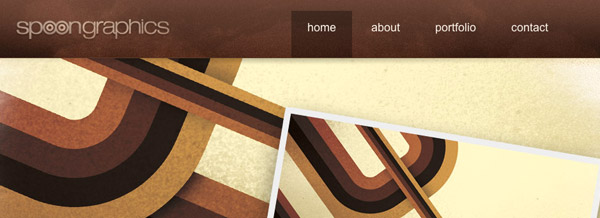
Chris Spooner of SpoonGraphics has a professional yet creative portfolio site.
Elements that your portfolio site should include:
- A list of services you offer
- Contact page including multiple ways of contacting you (form, email, twitter, phone, etc.)
- A little bit about who you are and maybe how you design
- Good samples of your work (duh!)
Perfect Your Profiles
After you’ve established a working portfolio and setup a decent looking site, it’s time to take to the streets and put your face out there. Everyone and their mother (and even their grandmother) is on the social media sites these days. You’ve probably already got a facebook and/or twitter account that you use for stalking and sharing your lunch choices. To step up your web cred, establish professional profiles on all the social networks.
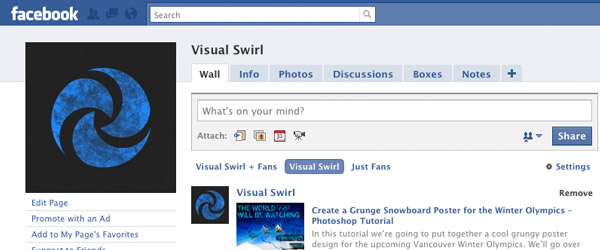
For Twitter, setup an account with the sole purpose of building credibility and networking. Fill out all the appropriate profile fields (name, location, bio, image, and background). Use this as a networking tool to meet designers, clients, and anyone else who may be interested in what you do. There are tons of articles on how you should and shouldn’t use a twitter account but basically treat it like a conversation. Don’t always talk about yourself. Don’t yell and repeat yourself over and over. And limit the references to what you’re going to have for lunch. That’s not relevant to your Web Cred.
Continuing on, setup a Facebook page and share some of your designs and thoughts there. Put a professional resume up on Linkedin or other professional social media sites. You can even sign up for a YouTube or a Vimeo account if you’ve got videos of your designs to share. In all of this, the main point is to get your face out there. Be findable on all the social media sites so that when someone looks you up, they know instantly what you do and how well you do it.
Get Your Face Out There
Here we’re continuing the theme of getting your face out there and driving traffic to your portfolio. Write articles for design blogs (like this one). Create freebies that can be distributed around the web. Become active on social voting sites, such as Digg, Design Bump or Design Float. Comment on design blogs and become a voice in the design community. All of these are great ways to plug your name on in cyberspace and ultimately bring traffic and credibility back into your court.
You can even start building your Web Cred offline. Plug your website whenever appropriate. Include your Twitter handle on your business card. Tell your friends and family to spread the word about your online presence. Basically, however you can, drive people to your sites and profiles online. The more exposure they have to you and your brand, the more of an authority you’ll become in their mind.
Respond to Criticism the Right Way
Inevitably someone will not like something about you. Maybe they don’t think your work is up to par or they dislike the way you run your business. It’s only a matter of time before someone tries to drag your name, and your reputation you’ve worked so hard to build, through the mud. How you respond will speak a lot about your character and can turn bad situations into cred-building opportunities.

Keep your cool and respond the right way
Answer your criticisms quickly and politely. There’s no need to get into a social media yell-fest so don’t stoop to the level of name calling and finger pointing. Take blame where blame is due and fess up to your mistakes. Modesty and humility can help turn a bad situation into a something that actually works in your favor. If customers see that you care about your reputation, they’ll be glad to bring more business your way, even with the occasional bump in the road.
Pay Your Dues
Again, there’s no magic formula to make it to the top. Hard work and patience will pay off in your cred-building activities. Establishing yourself as design authority can be a slow process. Just roll up your sleeves, put the pedal to the metal, get your game face on and do other cliche things that mention getting to work. It’s the work now that will payoff when you’re rolling deep with your Web Cred. And one more thing…Enjoy the journey!
How Do You Build Web Cred?
What are some other ways that you’ve expanded your presence on the web? What is the hardest part about getting your work out there? If you’ve already got Web Cred, how do you plan on maintaining it? Let me hear your questions, thoughts, and web-cred-building strategies in the comment section below.


Thanks for the post. It’s great.
Brilliant Article – useful information as always…..
Love the article! I was a little surprised you did not mention anything about Reviews… what is your stance on Reviews helping to build web-cred?
What type of Reviews? Please elaborate.
thanks for sharing some new post, its good to know anything new

sriganesh´s last blog ..Top commentators gets free Ad slot each month
I appreciate the article! Helpful and concise.
Great post Chris. I like the fact that you mention filling out the profiles for Twitter and Facebook. I see too many that have no information on them and they want you to follow them. Follow who? Good job.
Thanks for the post! Very Helpful
josh´s last blog ..Pro-Optic 8mm Fisheye Review
Great Post Chris very helpful.
I think it really helps act unselfishly, and help others out when you can. Helping someone out can make a friend, and a friend can help you back by helping spread the word about what you do! If all you ever do is talk about how great your own blog is, you won’t get anywhere.
Codesquid´s last blog ..Flags of the world using only XHTML and CSS part 2
I don’t believe I’ve seen a better example of helping out others than those within the design community. It’s truly extraordinary.
Nice post!
Sometimes there is a thin line between getting cred for customers or just for recognition from other designers.
Keep up the good work!
Vunky´s last blog ..Why I got rid off Digg, Reddit and Faves
Both are good but for different reasons. Other designers can’t pay the bills but having respect in the industry will definitely pay off in the end.
Nice article, keep up doing a great job

Mihai O.´s last blog ..The Success Of Your Business On The Web
This is some great stuff, Chris. Thanks for sharing. I really like your style of writing. Would you be interested in writing for Graphic Design Blender as a guest writer sometime? I’d love to have you. Let me know. Cheers and best of luck in all.
Preston D Lee´s last blog ..The beginner’s guide to blogging about design
I’d love to look at some sort of partnership. Thanks for the kind words!
I’m a big fan of write ups like this, I have one foot at the door of freelancing but something’s holding me back… But every time I read articles such as this, I get more information that I’m on the right track… Great write up Chris!
Thanks Chris. This is a good article ( more than that a good tutorial) for social networking designers.
I’m on the journey – with the latest step being a guest writer for this blog!
As you mention the journey is slow and long. But you have to go all the way to see where it takes you.
Many aspiring designers are taking this route at the moment, but are there other ways to success?
It’s really interesting article. Thanks for good information.
Nice artical, Thanks. I’m currently going through this process, having pushed my site live only a few days ago so this is very useful. Bookmarked.
Cheers!
Congrats on taking the plunge. Let me know how things go and if you have any questions or suggestions. I hope to see you back here often!
That was pretty impressive, Chris. Even though I am yet to become a professional designer, I think I have to build such a cred now itself.
Thanks a lot for sharing your views on this much needed discussion.
Great post. I find a lot of people getting into the design business with very little clue on how to promote themselves or even just get there work out there to attract more work.
I made this one of my three links on my Design Thought for the Day:
http://designthoughtfortheday.blogspot.com/2010/02/02-19-your-design-cred-olympics-tips.html
All the best, Ted
Every little bit helps. Thanks for your comment.
Really enjoyed the post Chris. As designers we tend to have a lot of solutions for our clients on how to promote themselves, but have no clue how to increase visibility for ourselves!
It’s kind of like a designer who’s website is hideous but who claims that they don’t have time to work on their own design because they’re too busy working on clients. That doesn’t scream “hire me” like they may think.
A very decent article. Of course, responding to this post might be another useful step in establishing a kind of Web Cred’. Many creatives do find it hard to promote themselves and I think that’s the crux. We’re not trying to sell a product as such – we’re selling ourselves. Objectifying ones skills and creative ability into a promotable, sellable package is a difficult task for some, but one that’s made easier by following many of your suggestions.
Keith Murdoch´s last blog ..Opera, CSS3 and border-radius. Oh dear.
I think it’s important to be yourself when you’re promoting yourself. It’s easy to come across as a fake but people can spot genuine attention and it will help. Every single thing you can do to get your face out there helps. Who knows who may be reading your comment on a blog somewhere and strike up a conversation that could lead to a long-term professional relationship. Great thoughts Keith!
Great read, the time is alway a real pain when you need to get your face out there!
Good points …and very easy to read. Loved the “Web Cred” idea – it certainly grabbed my attention!
Nice article to read, some really good points here. I must admit I’m guilty on this part “If all you do is read blogs about design and never design anything, what good does that do you?” I keep on reading and not actually do something. I think it’s a problem many people have in this area of work.
I don’t think you are right about the the social network subject. It’s okay for people to follow me on twitter, it’s even awesome, but Facebook is for my friends and family. English isn’t my foreign language so all my Facebook updates are in fact in Dutch. I do agree with you about filling in personal information on twitter, it’s strange to follow a nobody!
At the moment I’m only starting out working my way to the top and this article was really useful, thanks!
Let me clarify my facebook point. You should create a Facebook Fan Page for your Design Brand/Business. I use Facebook for personal updates so I don’t expect hundreds of followers but I do try and push people to become “fans” on my Facebook Fan Page. I hope this makes sense.
Great post, as a starter there is a lot to learn so such posts are very helpful.
Thank you.
Theo´s last blog ..Suchmaschinen-Optimierung, der Weg nach vorn
Wow, you said something I needed to hear. I am still in school but I am trying to get myself out there. I decided to become a graphic designer so late in the game(I’m 25 yrs old) but I know I have crazy things up my sleeve. It seems really hard to find time to work on projects outside of school work. Anyway great blog!
Have you ever thought of promoting work you do for school. Or possibly doing a guest post on a blog like this with a tutorial from one of your pieces for school? Just a few thoughts.
Good read Chris! I really enjoyed how realistic you are with your points. Right off the bat you say, “If all you do is read blogs about design and never design anything, what good does that do you?” This is a thing I think a lot of us are guilty of.
I see a lot of the same people posting in comments in different blogs, flooding their twitter account with useful resources yet I never see these people produce anything. I think some people like the idea more than the actually process of web design. I found myself doing this a few months out of last year
I then came to the realization I was gaining a lot of knowledge but I wasn’t doing anything with it. I needed to test myself.
I did a few fun sites with this mindset. One was for Space tickets, another file storage etc. just to keep my XHTML/CSS up to snuff (not to mention it helped build my portfolio). I think if you find yourself with free time, just jump in and build something, challenge yourself, and you’ll gain more confidence then you can imagine.
I’m glad you’re purposefully pursuing growth in design. Whether it be reading blogs (which is great), commenting on blogs (which is better) or working on your craft, as long as your pushing yourself forward, it’s all good. Thanks for sharing a brief part of your story.
Great article, thank for the informative info.
I’ve been reading your posts for the last couple of hours, and it all may be really informative and nicely written. I did want to allow you understand that for some reason this post doesn’t appear to work in Internet Explorer. On a side note, I had been wondering if you desired to swap blogroll links? I hope to hear from you soon!
Excellent Article, I would assume that the earlier commenter that referred to “reviews” was thinking of sites such as http://www.conceptfeedback.com/ , which I would agree are also very useful in building web credibility and visibility.
Pixelbox Design´s last blog ..Communicating with your web designer